The UAE’s growing space ambitions are moving beyond government-led missions and into commercial manufacturing.
One such example is Abu Dhabi-based Orbitworks, where satellites are built locally while the company develops its own AI-powered Earth observation constellation made up of 10 satellites, known as Altair.
The company was established to localise satellite manufacturing capabilities and hopes to capitalise on the global space economy’s rapid expansion, acting CEO Dr Hamdullah Mohib told Arabian Business on a visit to the site.
“Our mission is to localise satellite manufacturing capabilities,” Mohib said. “Alongside manufacturing satellites for customers, we’re also building our own constellation of 10 AI-enabled Earth observation satellites called Altair.”
The pride in his work is a key takeaway, not just in the project but the team around him, and he’s also keen to stress the sense of fun and collective vision.
“It’s only rocket science afterall,” he jokes.
Space as a part of everyday life
Recent milestones in the industry have brought unprecedented attention to the sector and helped business leaders accept reality; space technology underpins much of the modern economy and its importance is only set to grow.
“Space has become part of everyday life, even if people don’t always realise it,” Mohib said.
“From GPS navigation and weather forecasting to communications and commercial imaging, satellite technology already supports countless industries. Over the next decade, that reliance will only increase.”
He pointed to two major growth areas driving the industry; satellite communications and Earth observation.
Technology is evolving quickly away from traditional satellite phones and broadband service to direct-to-device connectivity, allowing smartphones to communicate directly with satellites.
“Communications are becoming increasingly accessible,” Mohib said. “What once required large satellite dishes is now available on aircraft, in offices and, eventually, directly through mobile phones.”
For Earth observation, satellite imagery is increasingly being used across industries ranging from insurance and agriculture to maritime security, infrastructure monitoring and investment analysis.
“Commercial demand is growing rapidly,” he said. “Insurance companies use satellite data, investment firms use it, governments use it.
“As sensors become more advanced and launch costs continue to fall, the applications will continue expanding.”
Mohib said industry forecasts suggest hundreds of thousands of satellites could be operating in orbit over the coming decade and Orbitworks are hoping to “capture that growth”.

Inside Orbitworks’ satellite operations centre
At their headquarters in Abu Dhabi, Orbitworks’ engineers continuously monitor spacecraft as they orbit Earth, downloading data whenever satellites pass over ground stations around the world.
The control teams oversee satellite health, schedule imaging tasks and monitor orbital conditions to avoid collisions with other spacecraft and space debris.
“Satellites operate largely autonomously,” Mohib explained. “Human intervention is only required when there’s a potential collision risk or another situation that requires manual decision-making.”
Engineers also monitor space weather, including radiation levels that can damage onboard electronics, and this is where human influence is essential.
“If a satellite suffers permanent damage, it effectively becomes a very expensive brick in space,” he said. “That’s why continuous monitoring is so critical.”
Depending on weather conditions and customer requirements, operators can also switch between different sensing technologies, including optical imaging and radar, allowing satellites to continue collecting data even when cloud cover limits visibility.

No margin for error
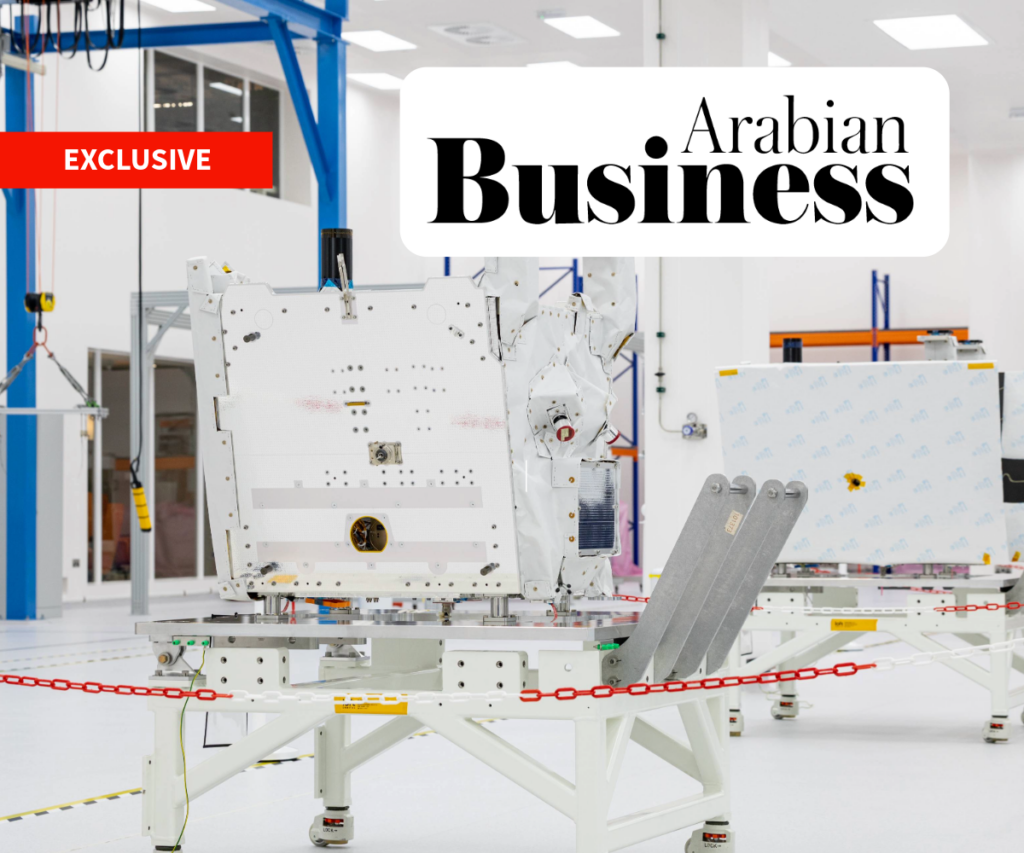
The company’s manufacturing facility reflects the precision required for spacecraft production.
Inside its clean rooms, multiple satellites move through different stages of assembly simultaneously, with every component undergoing repeated testing before launch.
“There are no second chances in space,” Mohib said. “Once a satellite is launched, you can’t send someone to repair it. Every component has to be tested extensively to ensure the entire system performs exactly as expected.”
The company is currently assembling satellites at various stages of development, with final testing taking place in ultra-clean environments designed to protect sensitive imaging payloads from microscopic contamination.
Why now, and why the UAE?
The UAE is investing heavily in advanced manufacturing and high-value technology sectors.
Companies such as Orbitworks are aiming to position the country as both a regional satellite production hub and a growing player in the global commercial space industry.
In May, Sheikh Hamdan bin Mohammed, Crown Prince of Dubai, Deputy Prime Minister and Minister of Defence, unveiled an AED 1 billion ($272 million) strategy to advance the country’s role in the sector.
He said the launch of the International Space Co-operation Programme would support the country’s mission to cement its growing status as a major player.
“The space sector remains a strategic priority for the UAE as we continue building a future economy driven by knowledge and innovation, while strengthening our position among the world’s leading nations in this field,” Sheikh Hamdan said on X.
“We are proud of the UAE’s pioneering space achievements, which continue to inspire future generations, and confident in our youth’s ability to turn ambition into achievements that contribute to a better future for humanity on Earth and beyond.”
As for achievements to date, Maj Hazza Al Mansouri made history in September 2019 by becoming the first Emirati to venture into space, while Dr Sultan Al Neyadi, who is now Minister of State for Youth Affairs, broke new ground in March 2023 when he was chosen to be the first Arab astronaut to carry out a long-duration journey through space.
What’s more, the UAE’s voyage to the asteroid belt between Mars and Jupiter is on track for a 2028 launch.
The MBR Explorer spacecraft, named in honour of Sheikh Mohammed bin Rashid, Vice President and Ruler of Dubai, is scheduled for a five billion-kilometre journey that will take eight years.
It is to perform fly-bys of six asteroids and then send a lander to the surface of a seventh.